
Case Study
Auto Finder Direct Case Study
autofinderdirect.com-
Role
Senior Graphic Designer
-
Team
Product Manager, Marketing, Developer
-
Deliverables
High Fidelity Designs, Component Libraries
The Challenge
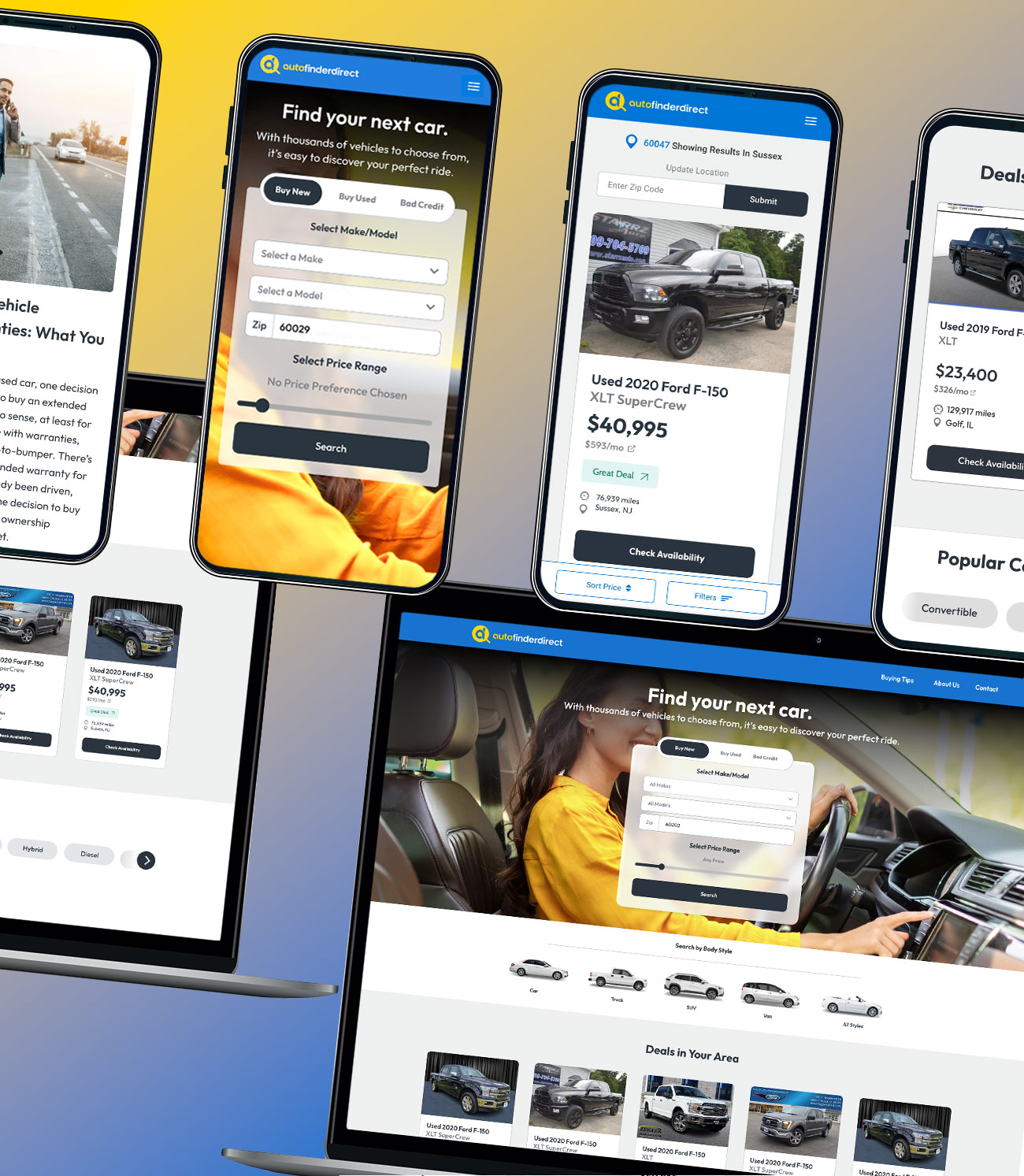
Auto Finder Direct was one of several lead generation automotive marketplaces developed to connect vehicle shoppers with dealership partners. The project involved a complete UX/UI redesign and brand refresh aimed at improving user engagement, reducing bounce rates, and increasing lead conversions across both mobile and desktop experiences. As one of five similar sites designed to capture users' personal data and direct it to the appropriate car dealership clients, the challenge was to create a user friendly experience that would be a template for all five microsites. Despite the site's primarily mobile audience, a robust desktop version was essential to meet monetization goals.
The Plan
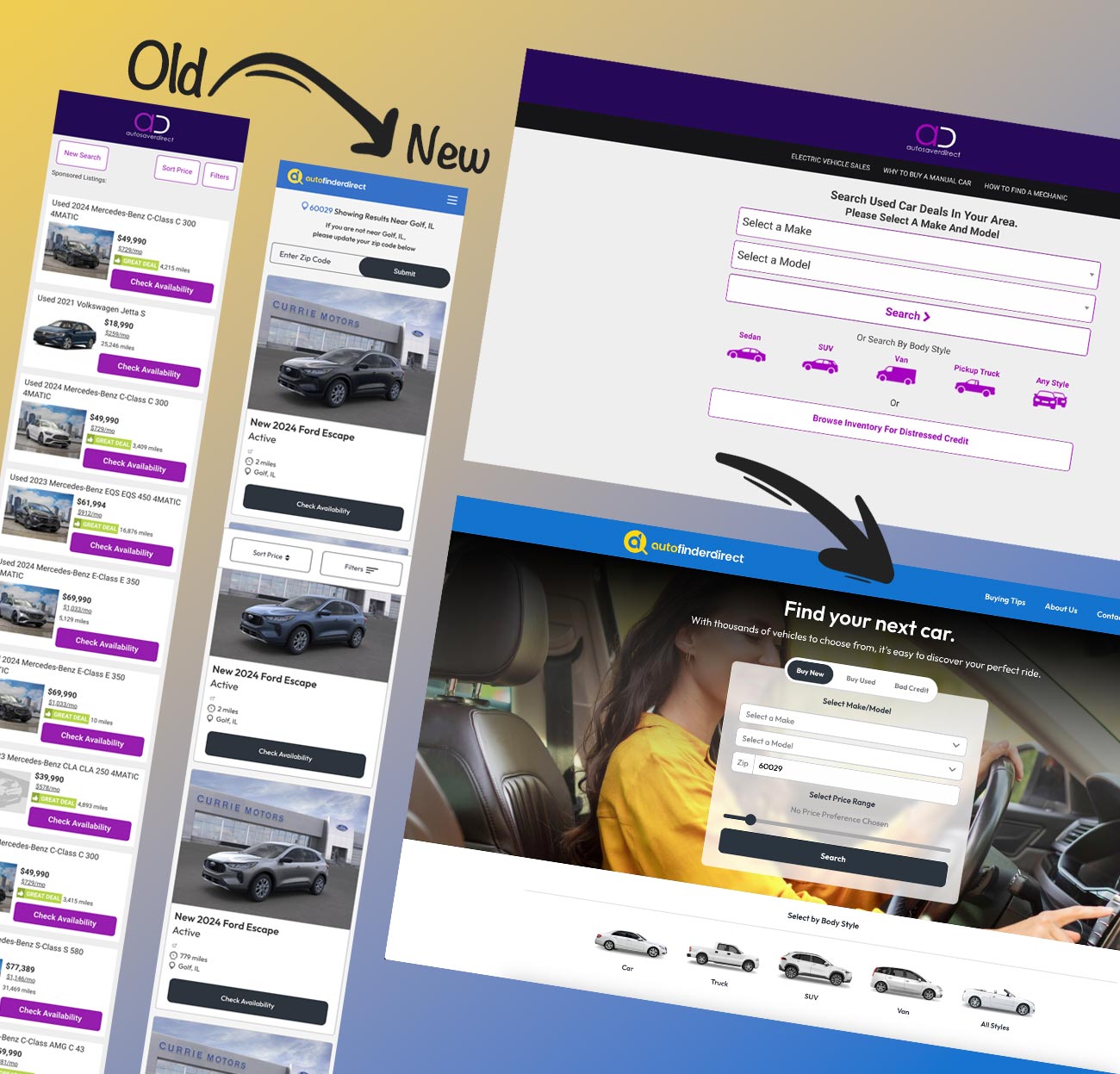
I began by redesigning the brand identity and website framework to create a scalable design system that could be adapted across five related automotive microsites. Once the visual direction was approved, I collaborated closely with development teams to translate the designs into a fully functional lead generation platform. I wanted to make a design that would be a template for our five other microsites with similar goals. After the approved rebranding and design I could then focus on collaborating with the developer to build out the website.
Highlights
Discovery
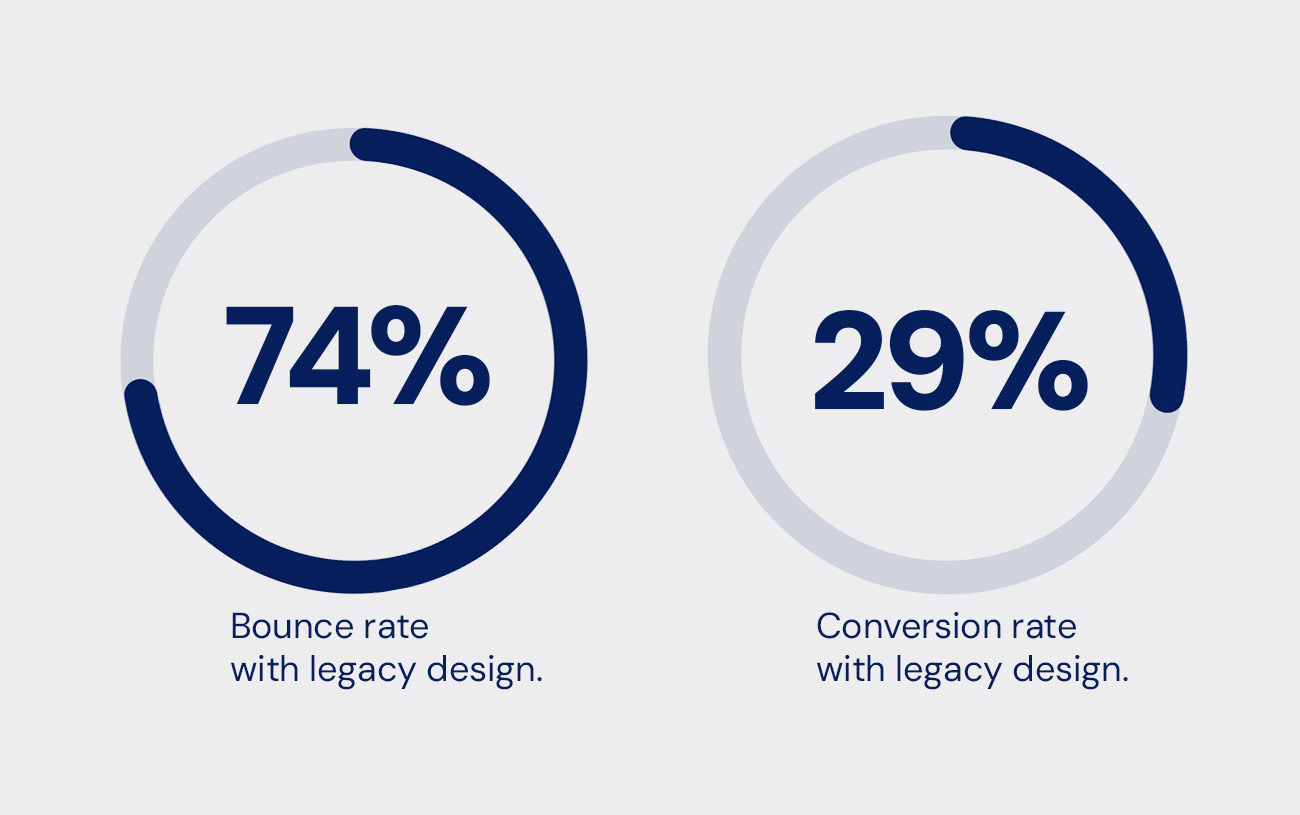
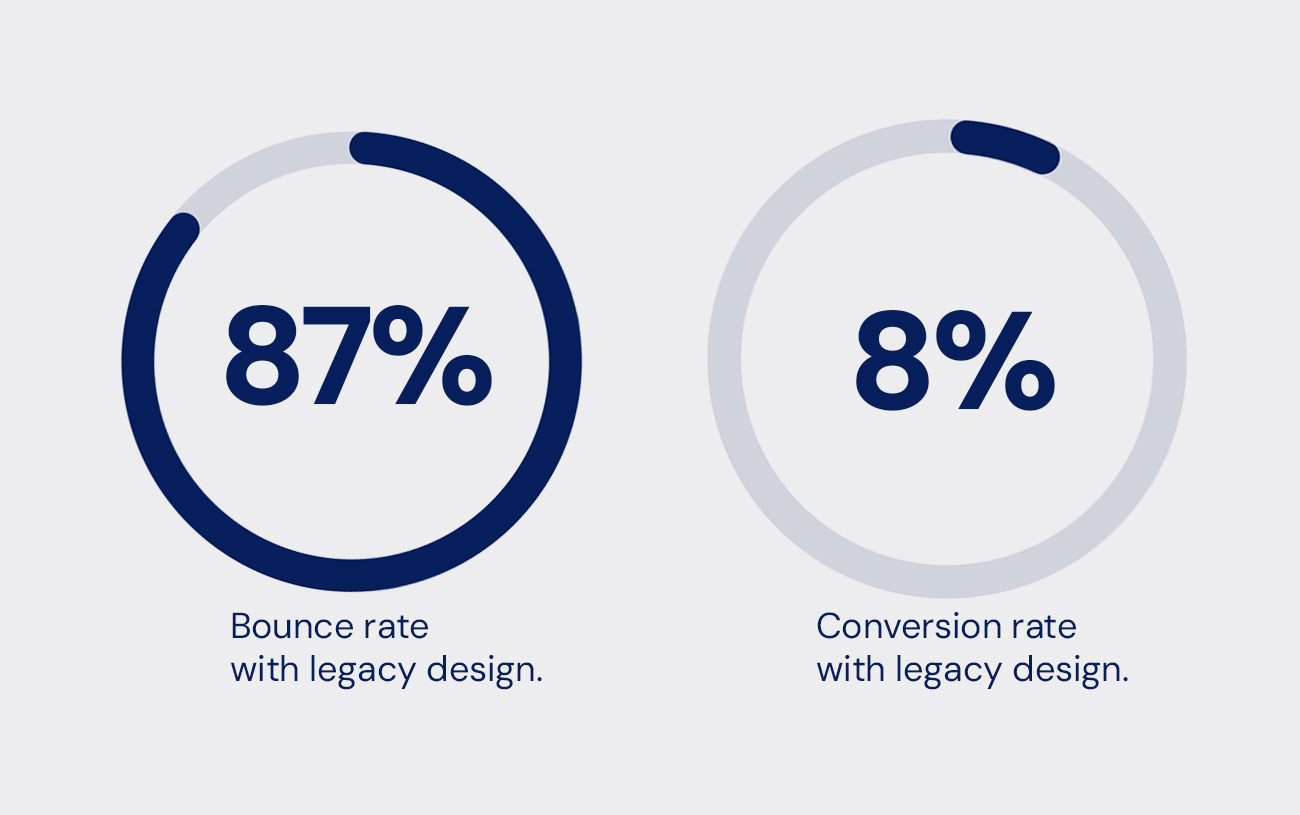
I worked with the marketing team to identify where users were abandoning the experience and contributing to an 87% bounce rate. It became clear that the vehicle search, listing, and detail page experiences needed to be modernized to better align with user expectations and improve engagement. Our bounce rate of 87% needed to be lowered.
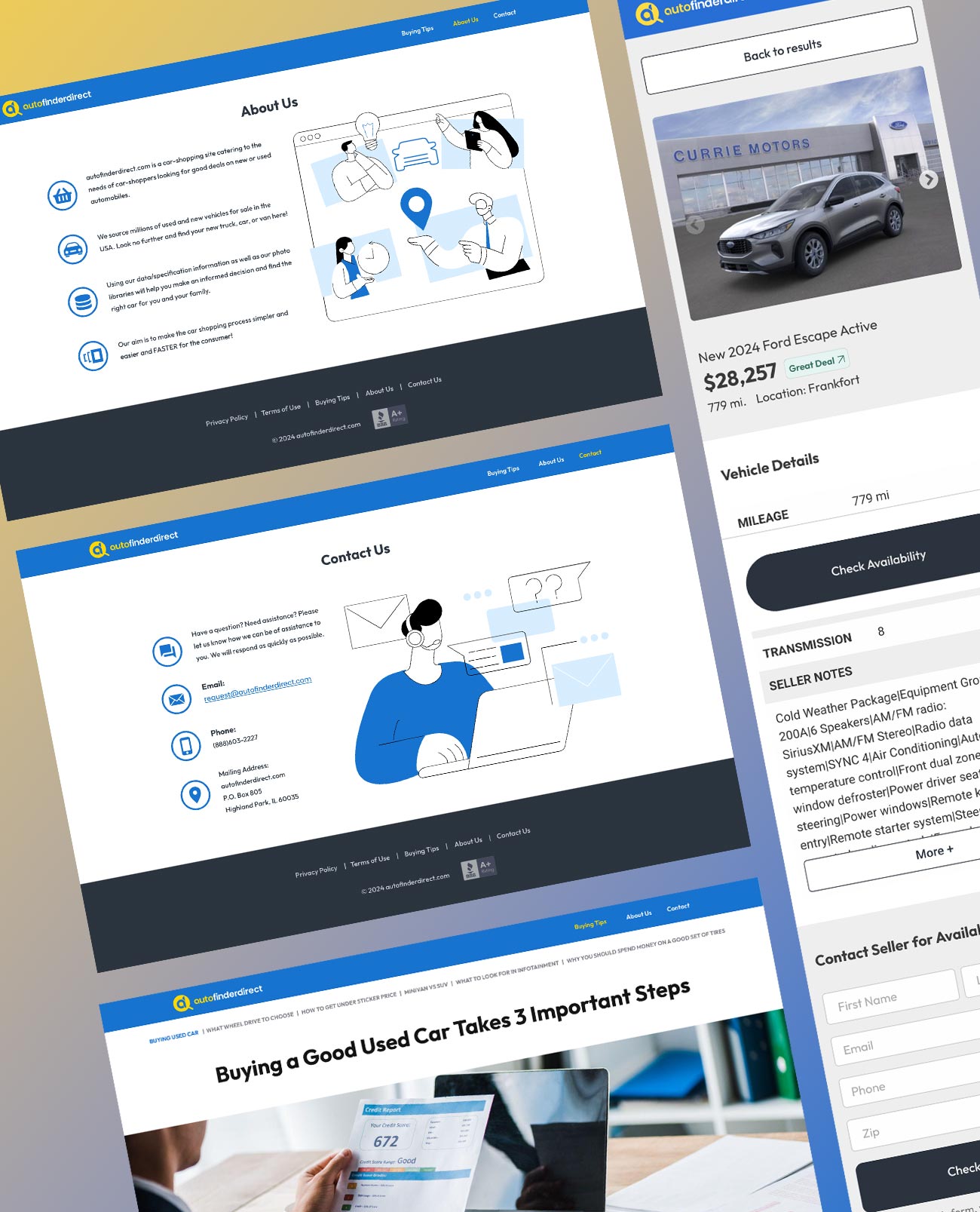
We also needed approval from Google to move forward with our PPC revenue goals. In order to receive approval we had to meet certain standards of content. It was essential that I incorporated editorial content as well as multiple search vectors into my design.
Observations
The Goal
Design & Development
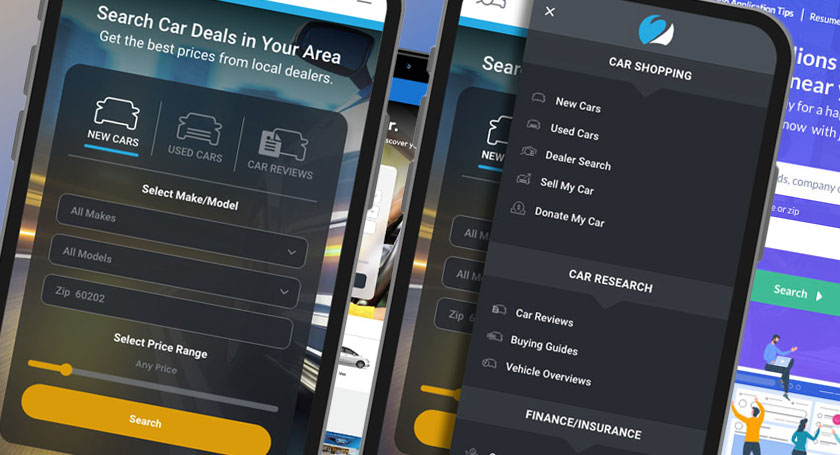
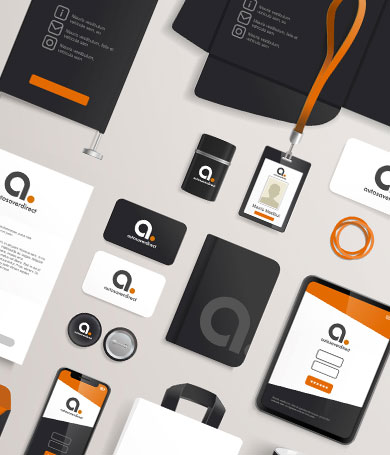
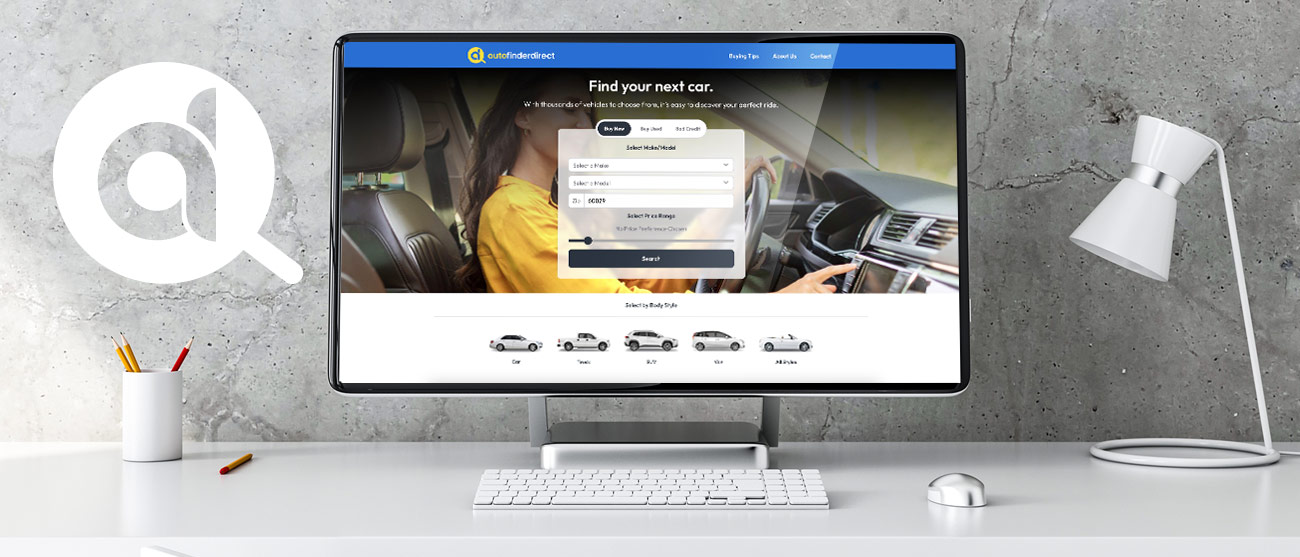
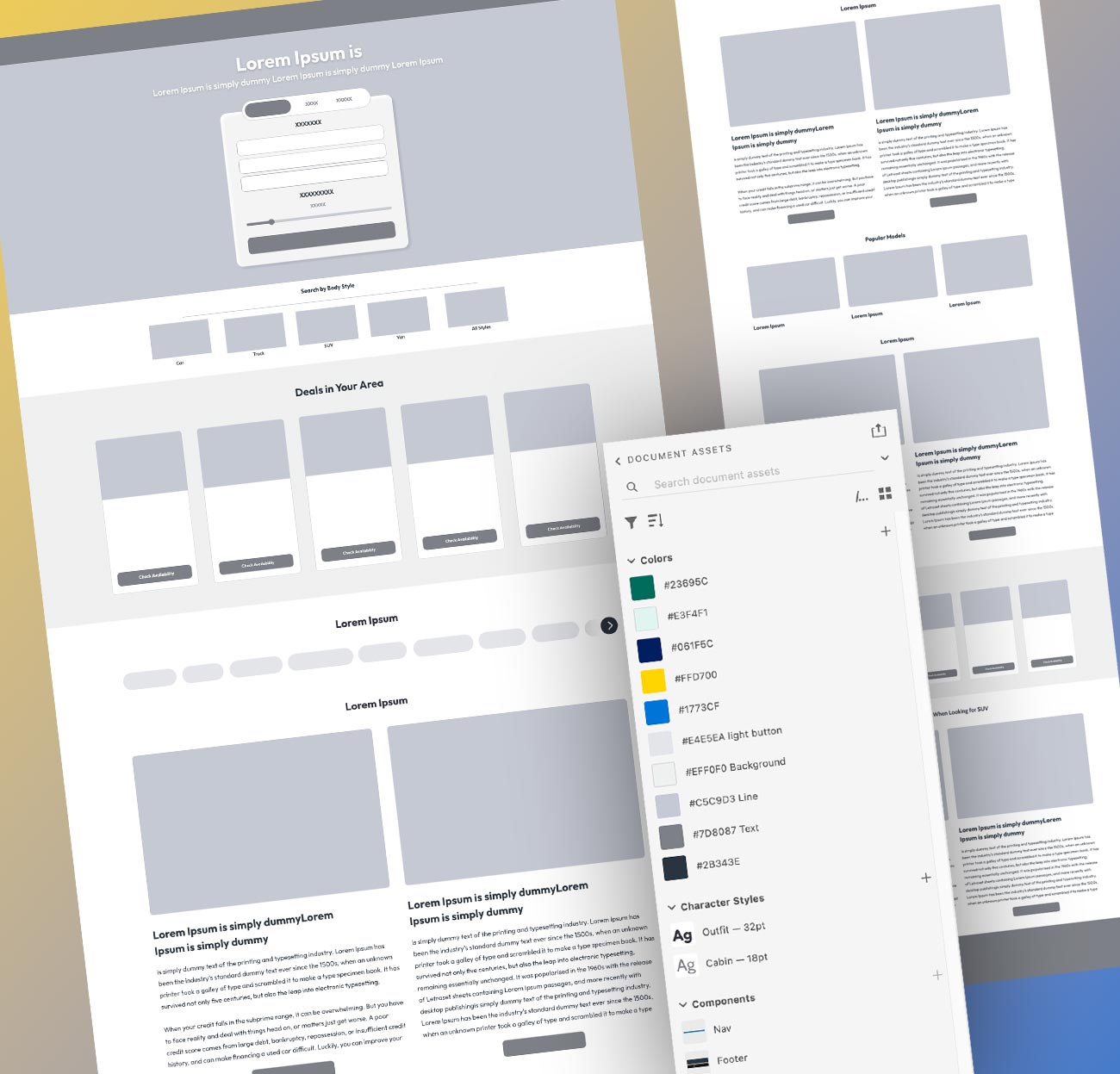
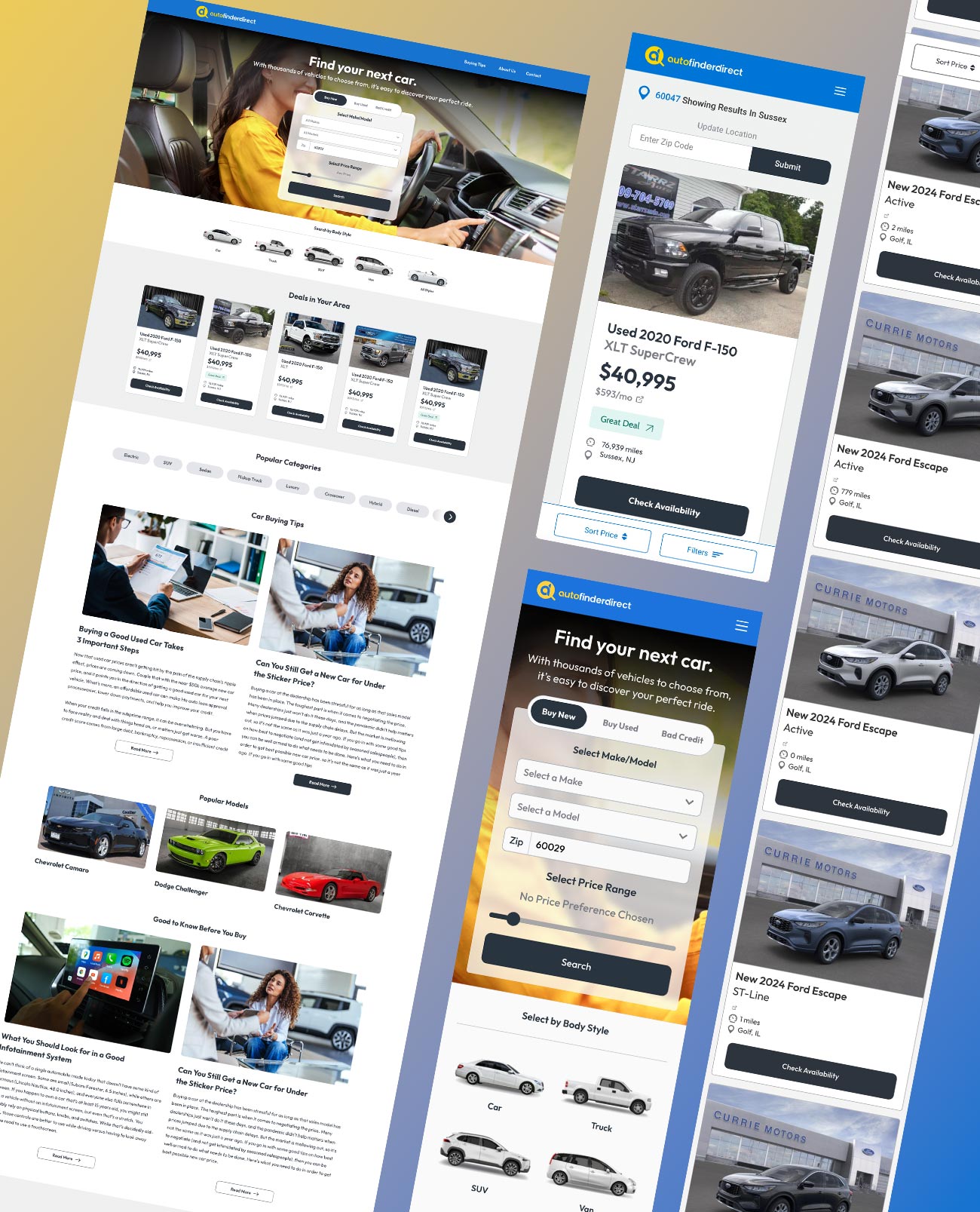
I began to develop a logo that could convey our car search services while looking current. I focused on creating low fidelity wireframes that established content hierarchy, navigation patterns, and multiple vehicle discovery pathways that could accommodate editorial content and multiple ways to search for a car.
I then centered my attention on developing a main search area that could be displayed on the hero section of the website. I knew I needed to incorporate both “body style” and “make and model” search options. After the hero section was finalized I moved on to redesigning the car listing cards. I realized that creating a visual hierarchy with the car data would be crucial. I designed them to highlight the car price to make quick scanning easier for the user.
Conclusion
Following development and QA testing, performance metrics were evaluated against the site’s original benchmarks. Using our in house methodology we determined that with the new design the redesign resulted in a 22% reduction in bounce rate and a 262% increase in conversion performance, validating the effectiveness of the new user experience, information architecture, and lead generation strategy.